
About us
About us
From the golden decade of the 1960s and 70s to today's revival — the story of cycling in Dire Dawa, and where we are going.
Background & legacy
The legacy of cycling in Dire Dawa.
-
1965–75
The golden decade
The story of Dire Dawa's cycling greatness began in the mid-1960s. From 1965 to 1975, the city became the beating heart of Ethiopian cycling, as a group of extraordinary riders took the sport to its peak and made Dire Dawa a household name across the nation.
- Jemal Rogora
- Solomon Tesema
- Yohanes Victorio
- Raguel Negash
- Daniel Victorio
- Asmelash G/Yesus
-
1970 · 71 · 74
Jemal Rogora, record breaker
Among the pioneers, Jemal Rogora stood out. He became Ethiopian National Champion three times — in 1970, 1971 and 1974. His consistency and power established him as one of the greatest athletes in Ethiopian sporting history.
-
1971
Dire Dawa, team champions
Dire Dawa as a city achieved its highest honor when it was crowned Ethiopian Team Champion, competing against 17 regions, including tough rivals Addis Ababa and Eritrea. Eritrea is today considered Africa's strongest cycling nation — yet in the 1970s, Dire Dawa defeated them at their peak.
-
The training
Legendary trainings
With limited equipment, the riders pushed themselves harder than ever. They trained on the tough roads from Dire Dawa to Qulubi to Harar and back, on old and heavy bicycles, building unmatched endurance. Jemal Rogora and Solomon Tesema once completed the route from Dire Dawa to Harla in just 26 minutes — despite a steep uphill climb.
-
1980
Olympic glory
Jemal Rogora's career reached its peak when he represented Ethiopia at the 1980 Olympic Games. To this day, he remains the first and only participant from the Hararge region to compete at the Olympics.
-
A people's sport
The whole city rode with them
In this golden age, cycling was more than a sport — it was a cultural phenomenon. The Ethiopian Championships were incredibly tough tournaments that attracted huge crowds. Riders became celebrities, and Dire Dawa's streets filled with fans whenever competitions were held.
-
Decades of silence
The glory fades
The golden era did not last. Famous clubs such as the Harar Beer Cycling Club collapsed, management and sponsorship were lacking, and financial support for riders was minimal. For decades only a few names, like Zerihun, kept the memory alive.
-
After 35 years
The revival
After almost 35 years of silence, Dire Dawa produced champions again. Kiya Jemal, son of Jemal Rogora, won 1st place nationally; Zerihun took 2nd; Amir Jafer secured 3rd. All three top spots in the national championship went to riders from Dire Dawa — for the first time since the era of Jemal Rogora and Solomon Tesema. Their success earned them the honor of representing Ethiopia at an African Championship in Egypt.
-
Today
A future built on strong foundations
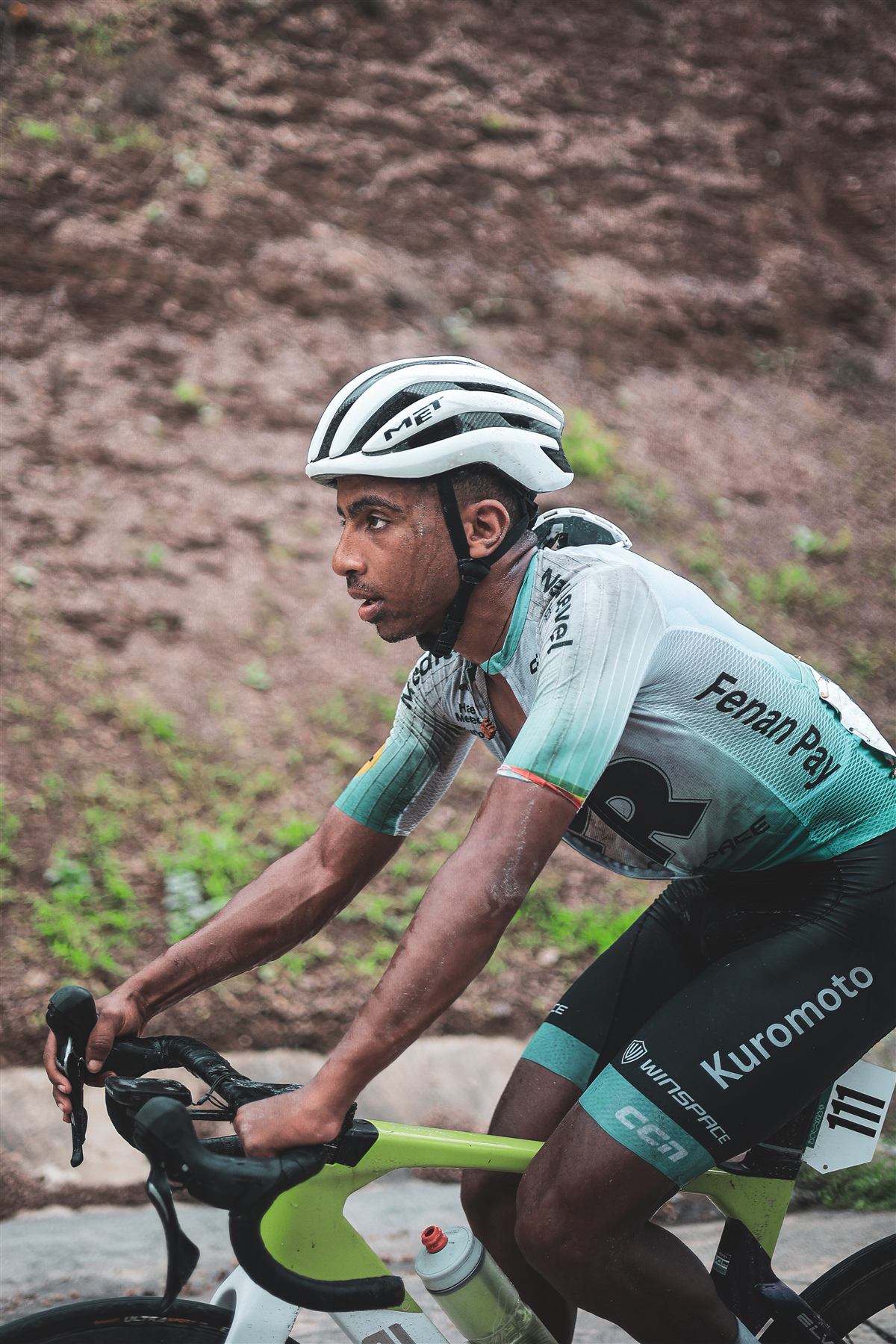
These riders succeeded almost entirely on their own efforts, without proper clubs, managers or equipment. JR Pro Cycling Team is here to change that: gathering top talents under one professional team, with proper salaries, equipment and management, so their potential lifts Ethiopia to international recognition once again.
Today & tomorrow
Ethiopia's first UCI Continental Team.
That is our ambition — subject to the applicable UCI requirements and approval. It will take reliable backing, the right team structures, compliance with UCI requirements and continued sporting development. Until then, our priority is clear: keep the team operational, competitive and developing riders all year round.
- 01
Maintaining rider housing and daily support
- 02
Providing more reliable rider salaries
- 03
Maintaining professional equipment and replacing essential parts
- 04
Competing in local tournaments and competitions
- 05
Supporting nutrition, training and rider development
- 06
Strengthening our management and operational stability